Camping
A long, slow camping journey: five nights each in Moremi, Khwai, Mudumu, Mana Pools, the Lower Zambezi and South Luangwa. For up to twelve people, in a route shaped around you.
Map positions and the route line are approximate. The dotted line is the flight. Click a number to open the place in Google Maps.
The route
- 1 · Moremi, 5 nightsStart in Maun, about 100 km.
- 2 · Khwai, 5 nightsA short drive out by the North Gate.
- 3 · Mudumu, 5 nightsAbout 240 km through Savuti to Kasane, then on across the Ngoma border into Namibia.
- 4 · Mana Pools, 5 nightsThe longest move: allow 2 to 3 travel days via Livingstone, Lusaka and the Chirundu border, or fly part of it.
- 5 · Lower Zambezi, 5 nightsBack across the Chirundu border, a short distance away.
- 6 · South Luangwa, 5 nightsFly from the park's airstrips to Mfuwe, about 1.5 hours, with 20 kg in soft bags. Fly home via Lusaka.
Nights are a suggestion. Every trip is planned around you.
Moremi
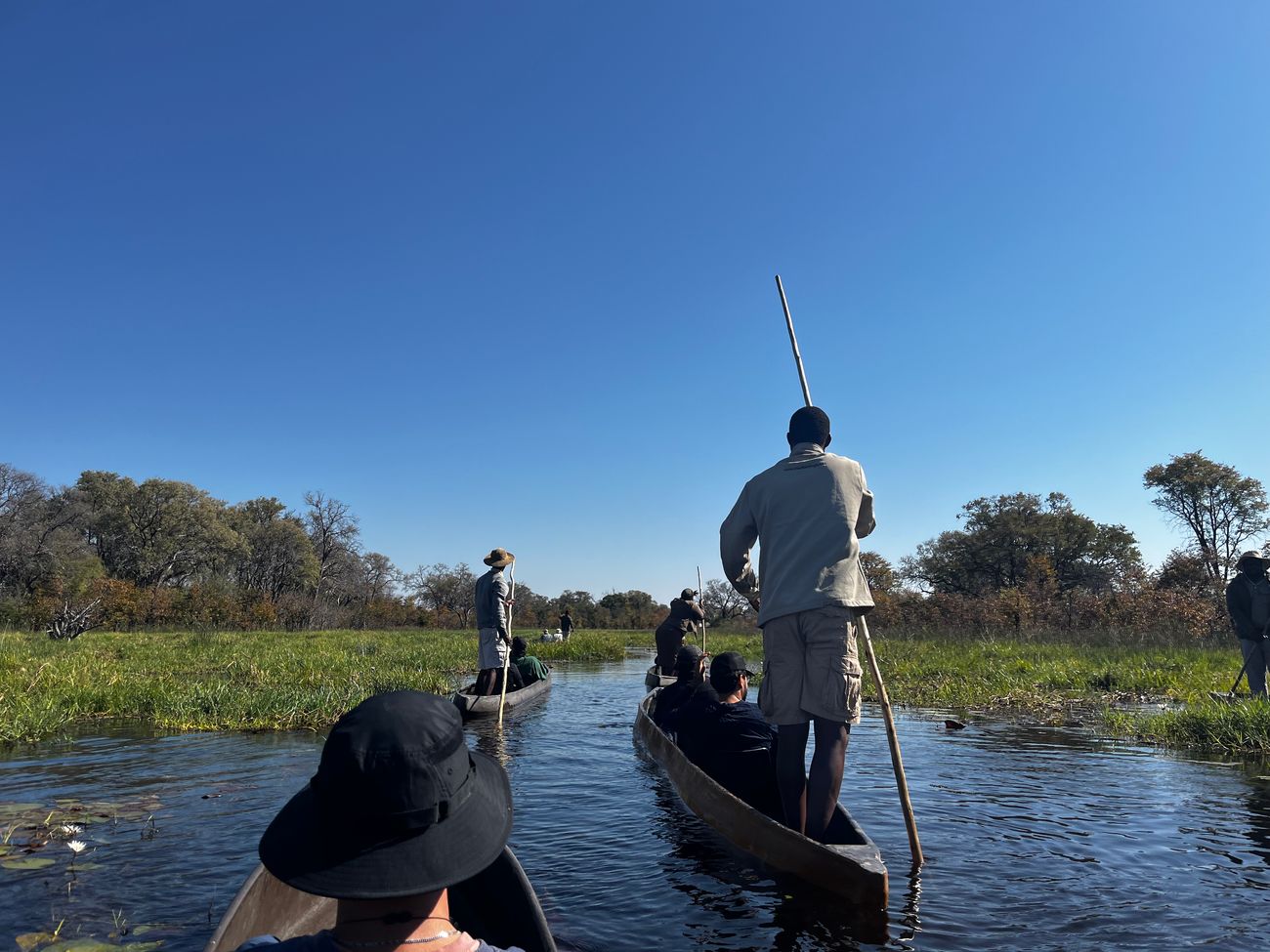
Moremi protects the eastern side of the Okavango Delta and is the only part of it set aside as a game reserve. Dry land meets lagoons and floodplains here, so you can search for lion, leopard, elephant and wild dog by vehicle in the morning, then glide through the reeds in a mokoro in the afternoon. Water levels are highest in the dry months, when mokoro trips and boat trips are at their best. Third Bridge and Xakanaxa are the classic areas, and the Khwai River on the northern boundary is superb for game. Birdlife is outstanding, with fish eagles and storks on the water.
Where to camp, cheapest first
Approximate prices only, for accommodation at this stop only.
From about US$40 per person per night
All sites are unfenced, so wildlife walks through camp. Add park entry of about US$20 per person per day, a camping fee of about US$4 and your vehicle fee.
Xakanaxa campsite
Eight unfenced sites on the lagoon, with flush toilets and hot showers. Boat trips can be arranged.
About US$40 per person, plus park feesGame drives
Your own vehicle and guideSouth Gate campsite
Ten sites with braai and shade at the reserve entrance, with flush toilets and hot showers. No power.
About US$40 per person, plus park feesGame drives
Your own vehicle and guideThird Bridge campsite
The classic unfenced Moremi site, with ablutions and a small shop. We confirm whether it has reopened after the 2026 floods.
About US$42 per person, plus park feesGame drives
Your own vehicle and guideNorth Gate campsite
Public campsite on the Khwai River, handy for moving on to Khwai.
About US$50 per person, plus park feesGame drives
Your own vehicle and guide
Khwai
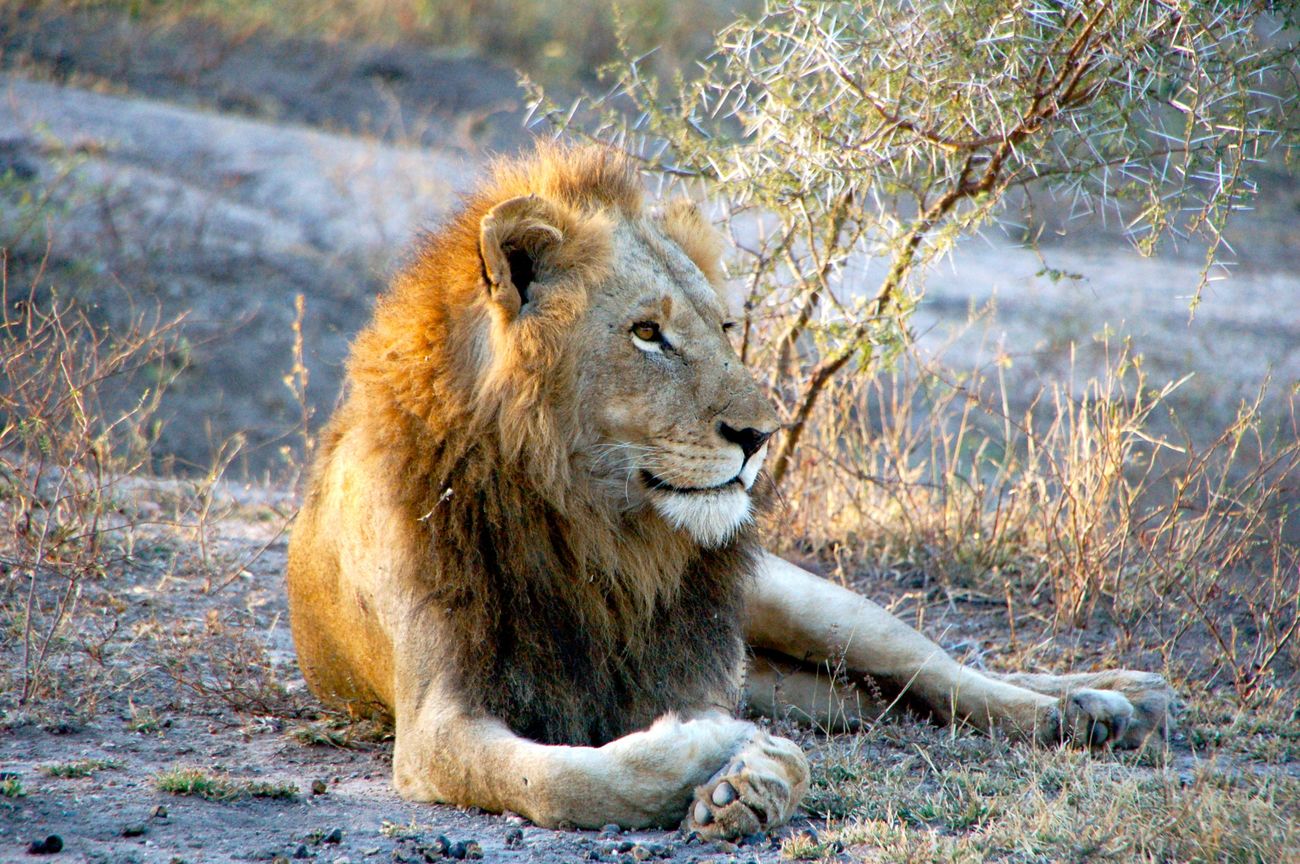
Khwai is a community-run area on the northern edge of Moremi, along the Khwai River. The river flows all year, so the game stays close: elephant, hippo, lion, leopard and wild dog are all regularly seen here. Unlike the national parks, Khwai allows night drives and walking safaris, which is its great advantage over Moremi next door. Take a mokoro on the river for a quieter view of the water and its birds. Staying here costs far less than inside the reserve, and you can still enter Moremi by the North Gate. It's the best value on this route in northern Botswana.
Where to camp, cheapest first
Approximate prices only, for accommodation at this stop only.
About US$30 per person per night
Community-run, not a government site. Add Moremi park fees on days you enter the reserve.
Magotho campsite
15 community-run sites under camelthorn trees, 20 km east of Khwai village. Basic ablutions with cold water only.
About US$30 per personGame drives
Your own vehicle and guide
Mudumu
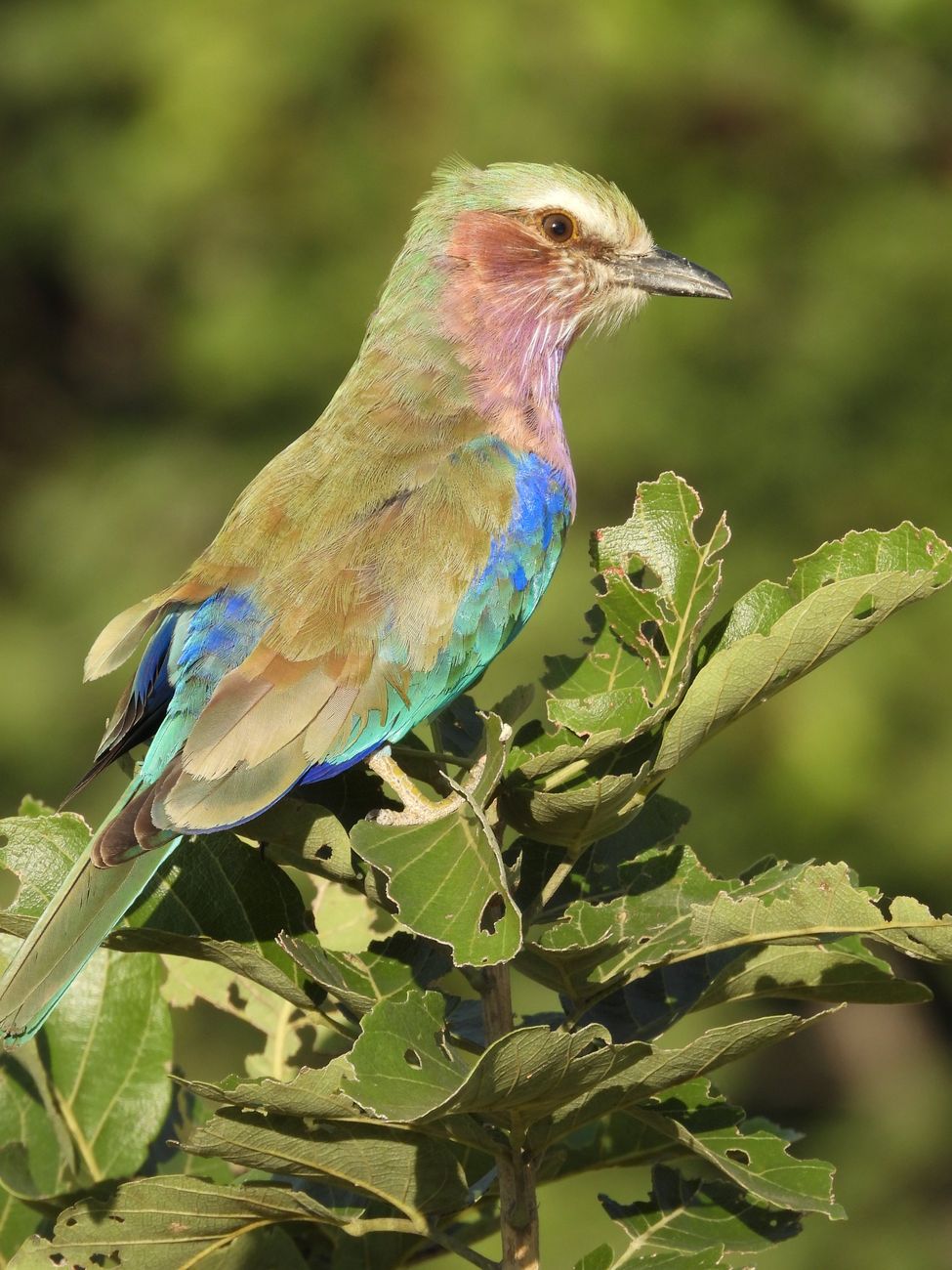
Mudumu is small, flat and quiet: about 1,010 km² of Kwando River floodplain, grassland and mopane woodland on the Botswana border. With no fence or formal gate, it forms a corridor for elephants moving between Botswana, Zambia, Angola and Zimbabwe. Take a boat on the river past hippo and crocodile, then explore the tracks on a game drive. Buffalo, red lechwe, sable and sitatunga are here, along with lion, leopard and wild dog. Around 430 bird species make it a birder's favourite, with African skimmer and fish eagle on the river. It's a calm stop on the journey, with very few other visitors.
Where to camp, cheapest first
Approximate prices only, for accommodation at this stop only.
Fee to be confirmed
Inside the park, Nakatwa is the only campsite we found, and it has no published price. Namushasha campsite, just outside, is a private alternative with facilities.
Nakatwa campsite
One large grass site on the Kwando, inside the park, with no facilities. Bring water, food and fuel.
Ask usGame drives
Your own vehicle and guide
Mana Pools
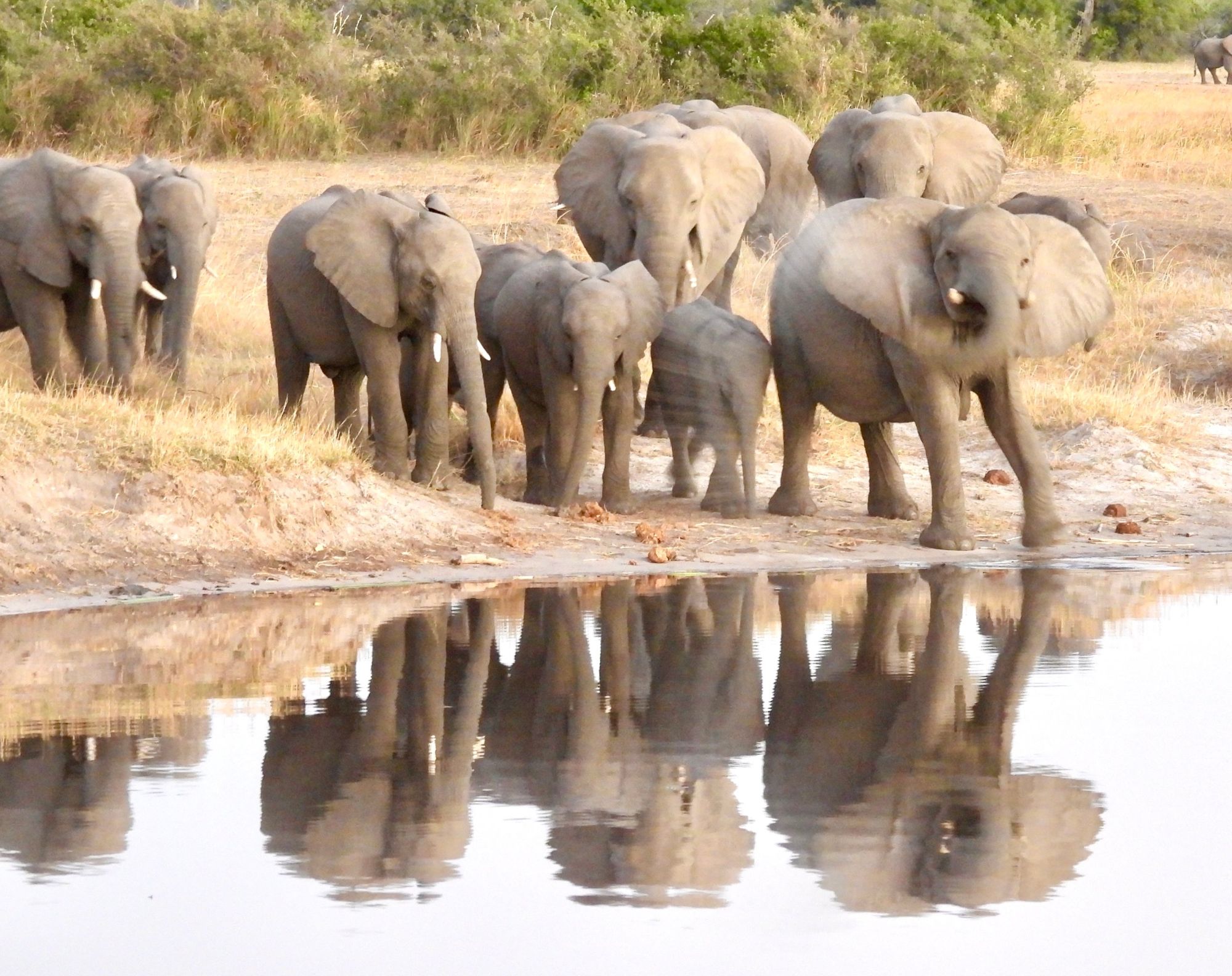
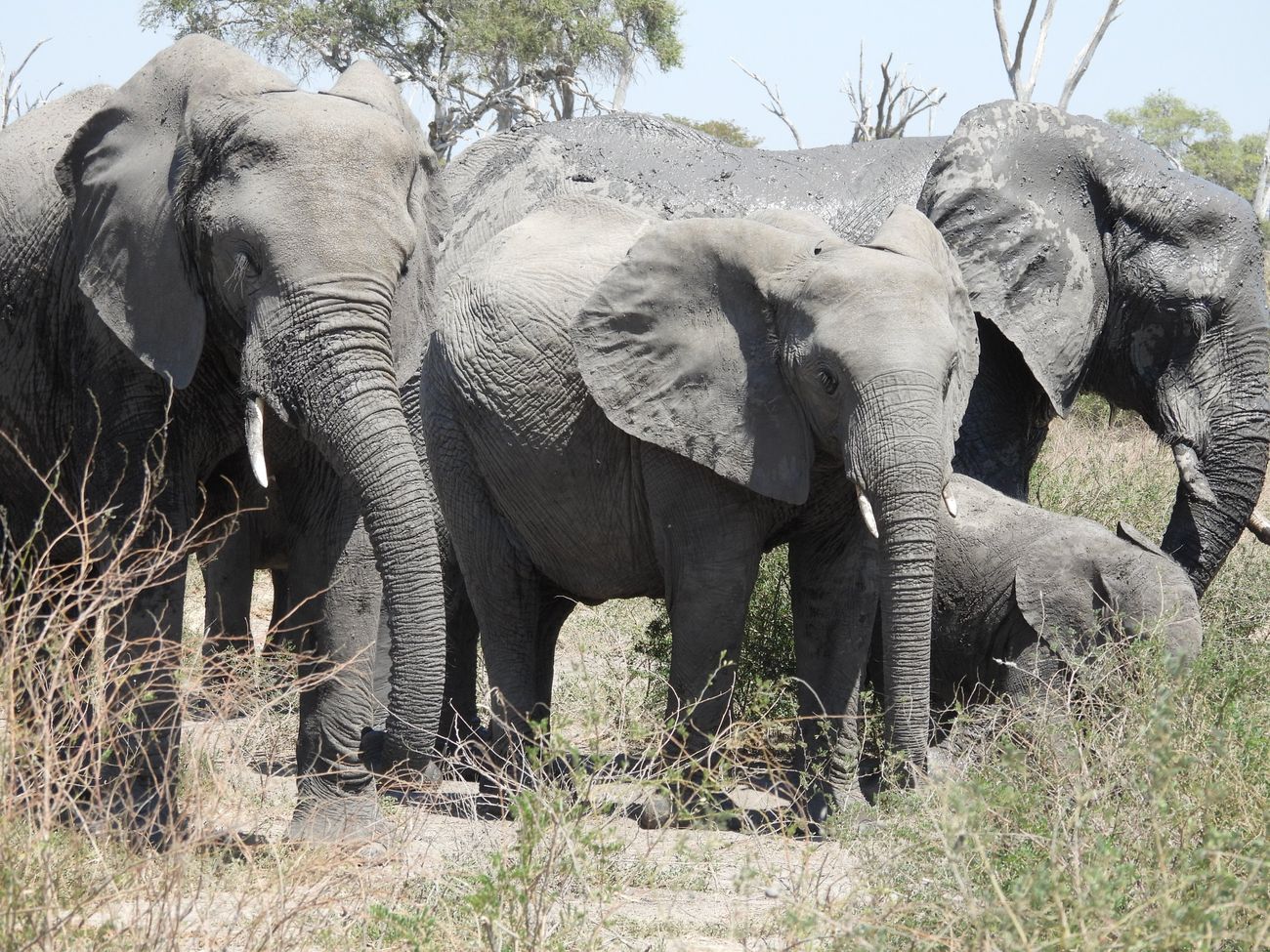
Mana Pools is one of Africa's great wilderness parks and a UNESCO World Heritage Site. Its pools are former channels of the Zambezi, and "mana" means four in Shona. In the dry months, large herds of elephant and buffalo gather on the floodplain, followed by zebra, waterbuck, lion and hyena. Leopard, cheetah and wild dog live here too, along with more than 450 bird species. What sets it apart is the freedom to explore on foot with a guide, among tall winterthorns, or by canoe on the river. With luck, you may see elephants rise on their hind legs to reach the pods.
Where to camp, cheapest first
Approximate prices only, for accommodation at this stop only.
From US$100 per site per night
Add park entry of about US$20 per person per day. Bring everything, including firewood if you prefer.
Nyamepi: standard site
30 sites by the park office, with hot showers and flush toilets. Up to 6 people per site.
US$100 per site, plus park feesGame drives
Your own vehicle and guideNyamepi: riverfront site
The same camp, right on the Zambezi. Up to 6 people per site.
US$130 per site, plus park feesGame drives
Your own vehicle and guideExclusive campsite
Your own secluded site with few or no facilities, for up to two vehicles and twelve people.
US$200 per site for 6 people, then US$50 per person, plus park feesGame drives
Your own vehicle and guide
Lower Zambezi
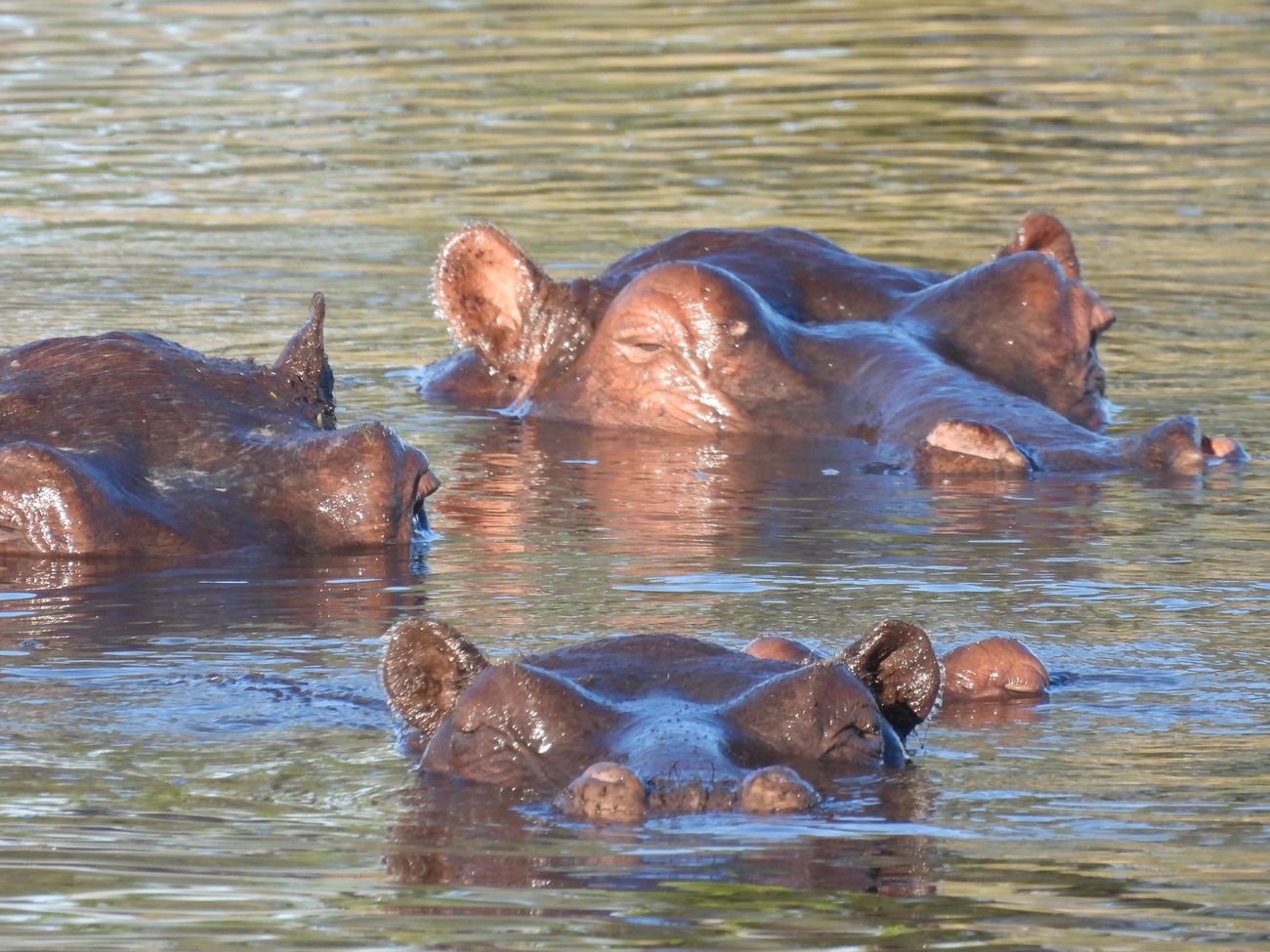
This park covers about 4,092 km² of valley floor between a steep escarpment and the river, facing Mana Pools on the opposite bank. The river is the highlight. Canoe through quiet side channels past hippo and crocodile, watch elephants wade between islands, and fish for tiger fish. Game drives and guided walks explore winterthorn woodland, home to buffalo, waterbuck, lion, leopard and wild dog. Elephant herds here can reach about 100 animals, while fish eagles and bee-eaters work the banks. You won't see giraffe: the escarpment keeps them out. Expect few people, big trees and long, slow afternoons on the water.
Where to camp, cheapest first
Approximate prices only, for accommodation at this stop only.
About US$45 per site per night
We found no public campsite in this park, so this is the closest private option.
Mvuu Lodge campsite
Private riverside sites with hot showers, flush toilets and braai, about 18 km from the park.
About US$45 per siteGame drives
Ask us
South Luangwa
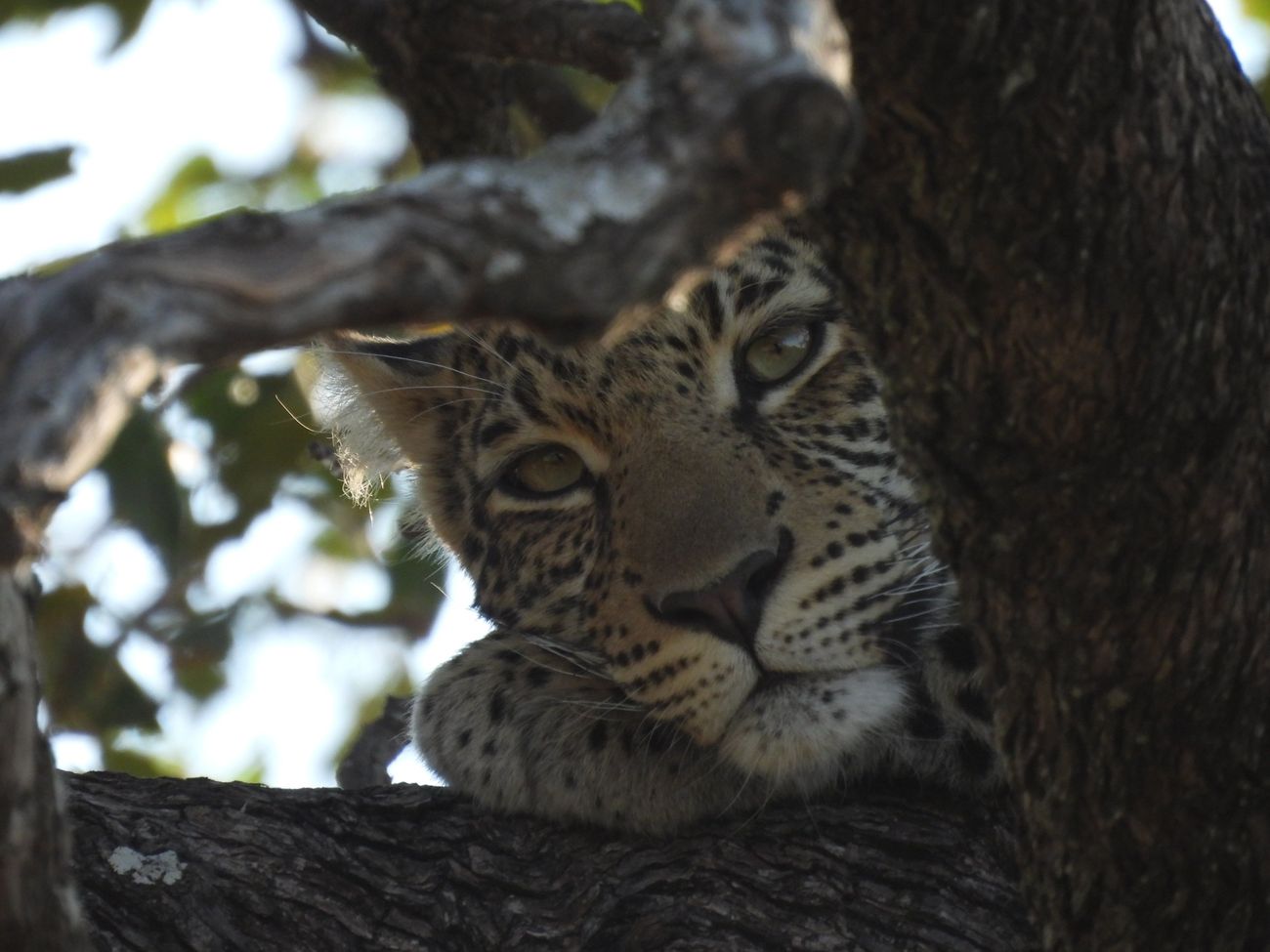
South Luangwa covers 9,050 km² of eastern Zambia and is the country's most celebrated park. It's famous for walking safaris on foot with a guide and for night drives, and the Nsefu Sector has recorded some of the highest leopard densities in southern Africa. Elephant, buffalo, hippo, puku and lion are easy to find along the river's oxbow lagoons. Look for Thornicroft's giraffe, Crawshay's zebra and Cookson's wildebeest, all largely limited to this valley. More than 400 bird species have been recorded, and carmine bee-eaters nest in large colonies from mid-August. It's the perfect, wild finale to this trip.
Where to camp, cheapest first
Approximate prices only, for accommodation at this stop only.
About US$160 per person per night
We found no public campsite in this park. This is a private camp, and its price includes meals and activities, so it is not comparable with the other stops.
Croc Valley Camp campsite
Private sites with power, water and thatched lapas on the river, opposite the park. Older package rate with meals and activities.
About US$160 per person, packageGame drives
Included
What 30 nights of camping cost
Approximate prices only, for campsite fees only, per person with two people sharing a site. Excludes overnight stops on travel days.
Campsite fees only. Mudumu is an estimate because its fee is unconfirmed, and South Luangwa is an older package with meals and activities.
Moremi about US$220; Khwai 150; Mudumu 90; Mana Pools 250; Lower Zambezi 110; South Luangwa 800.
Per-site prices at Mana Pools and the Lower Zambezi fall as more people share. Up to 6 people fit on a Nyamepi site.
A guide only, not a quote. Prices come from published rates and forums from 2017 to 2026, converted at about P13.50 to the dollar. Your guide, car, food, park entry fees, fuel, gear, flights, visas and activities come on top.
Best time to travel: start in early July
A trip of this length takes more than a month, so timing matters. Starting in early July keeps you in the dry season throughout and reaches Mudumu before boat trips become limited, finishing in August in South Luangwa as the carmine bee-eaters arrive.
| Where | Jan | Feb | Mar | Apr | May | Jun | Jul | Aug | Sep | Oct | Nov | Dec |
|---|---|---|---|---|---|---|---|---|---|---|---|---|
| Moremi | Fair | Fair | Fair | Good | Good | Good | Best | Best | Best | Best | Good | Good |
| Khwai | Fair | Fair | Fair | Good | Good | Good | Best | Best | Best | Best | Good | Good |
| Mudumu | Poor | Poor | Poor | Fair | Best | Best | Best | Best | Best | Good | Fair | Poor |
| Mana Pools | Closed | Closed | Closed | Fair | Good | Best | Best | Best | Best | Best | Good | Closed |
| Lower Zambezi | Closed | Closed | Closed | Fair | Fair | Good | Best | Best | Best | Best | Fair | Closed |
| South Luangwa | Poor | Poor | Fair | Fair | Good | Best | Best | Best | Best | Good | Fair | Poor |
Moremi and Khwai
July to October is the best time, when wildlife viewing improves as the land dries and water levels are at their highest for mokoro trips. October is extremely hot.
Mudumu
May to September is the prime season. Boat trips on the Kwando are often limited from September to December, when water levels are low.
Mana, Zambezi and Luangwa
June to October is the prime season in all three, with thin bush and animals drawn to the rivers. Camps close and roads turn difficult in the rains.
Make it yours
Change the order, add nights, or swap a lodge for wild camping. Tell us who is coming and when.
Plan this safariAll 2027 itinerariesBack to the home pageWildlife photos are from our own safaris and do not necessarily show these exact places. Lodge availability, access roads and border rules can change; we confirm everything before you book.